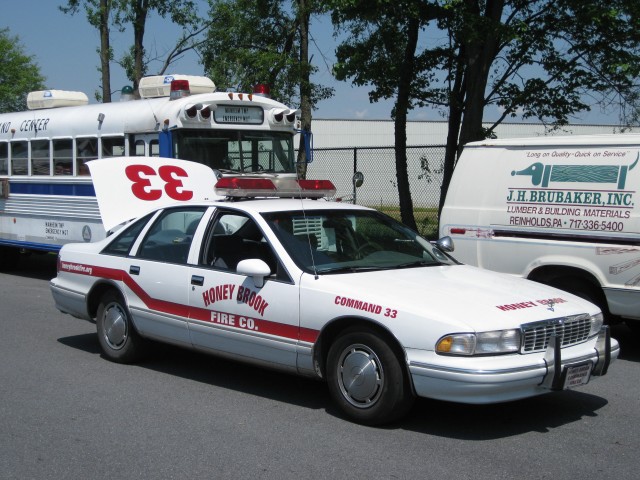
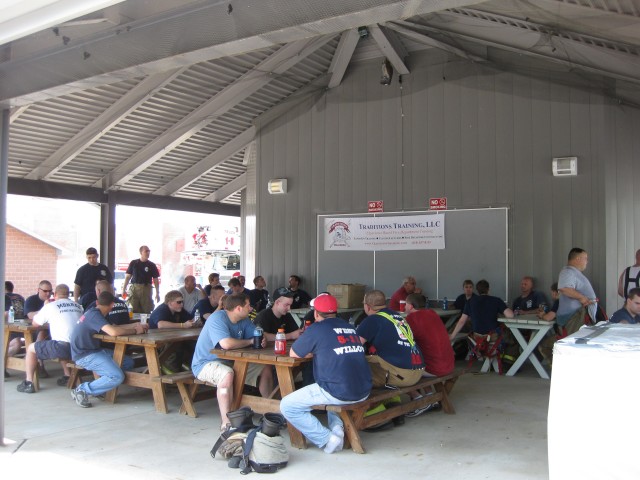
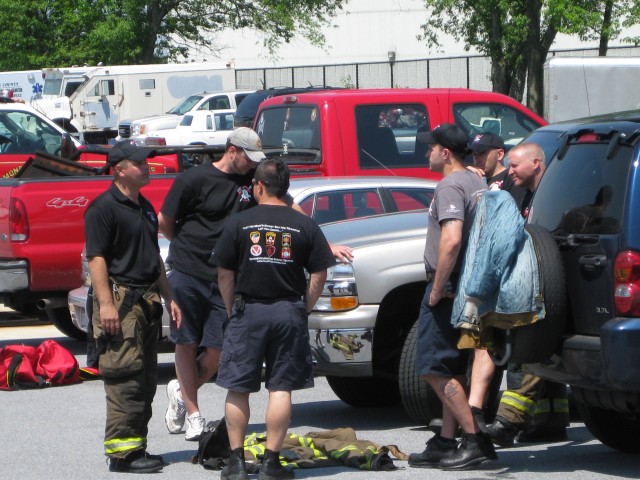
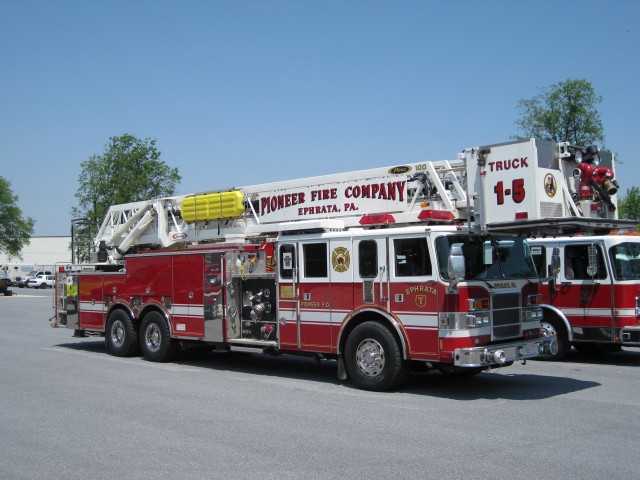
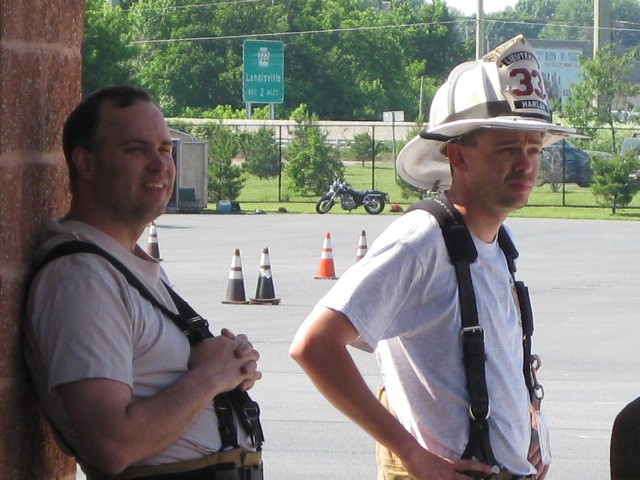
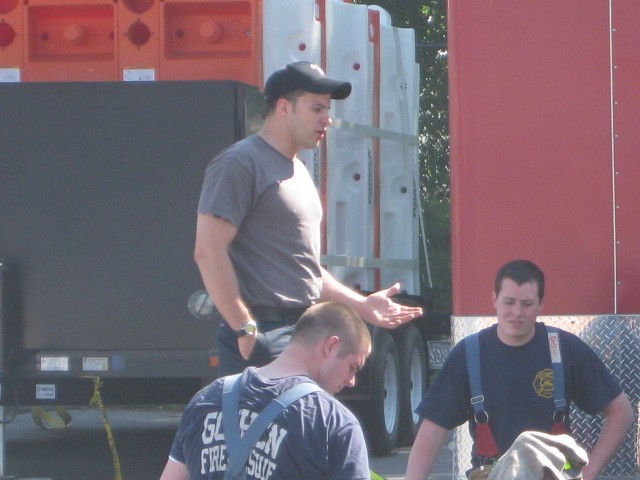
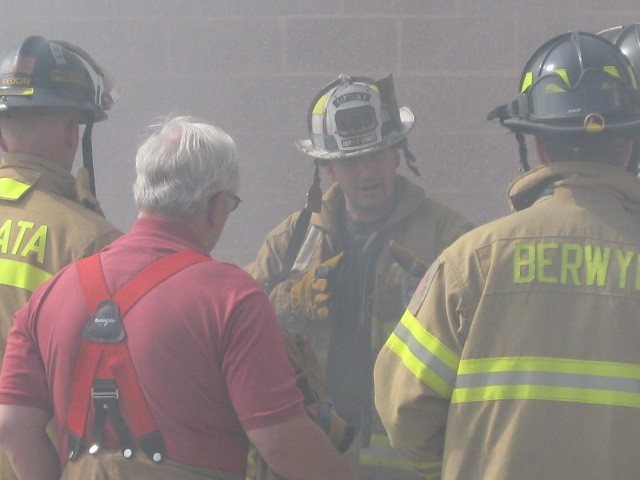
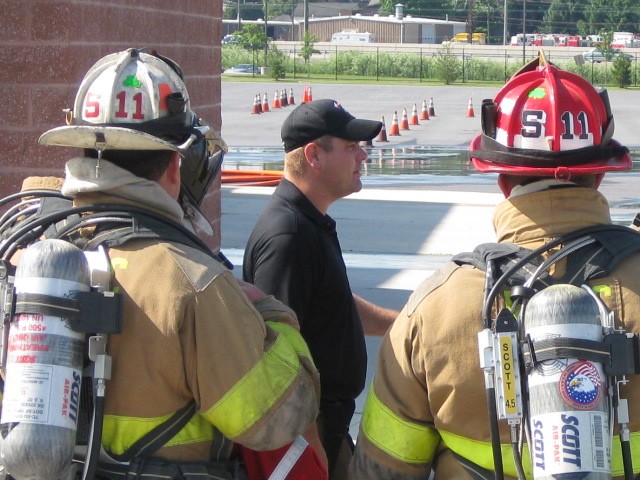
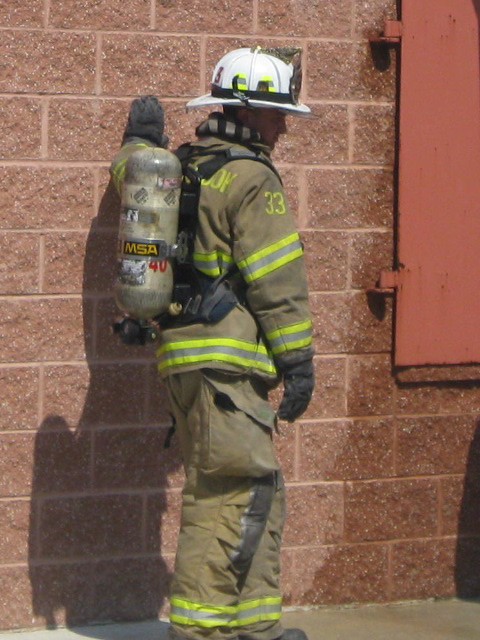
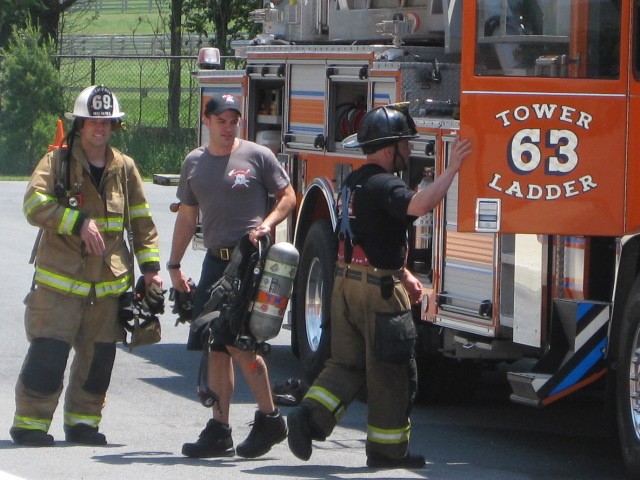
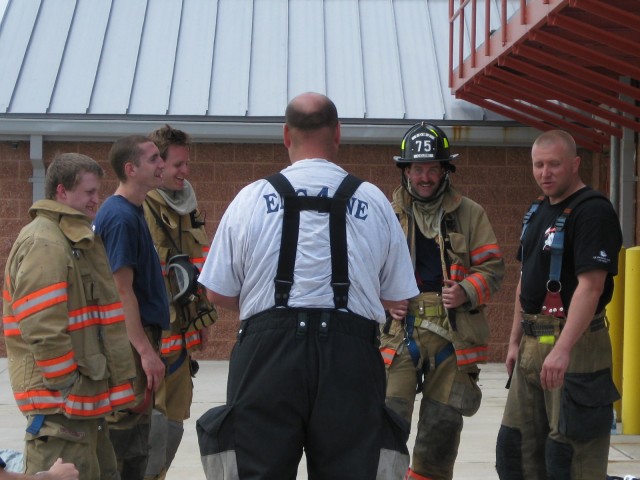
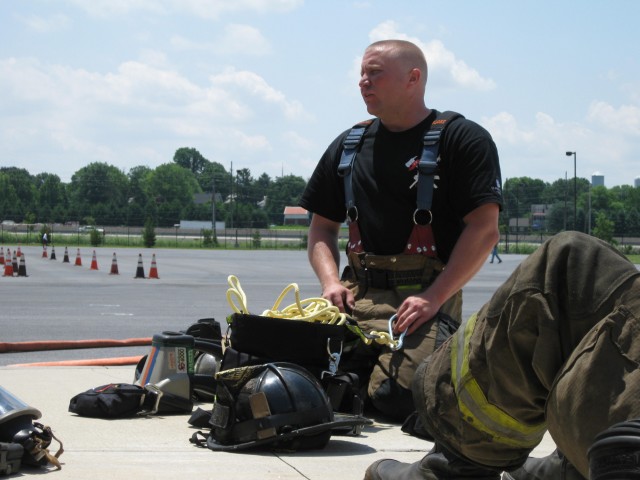
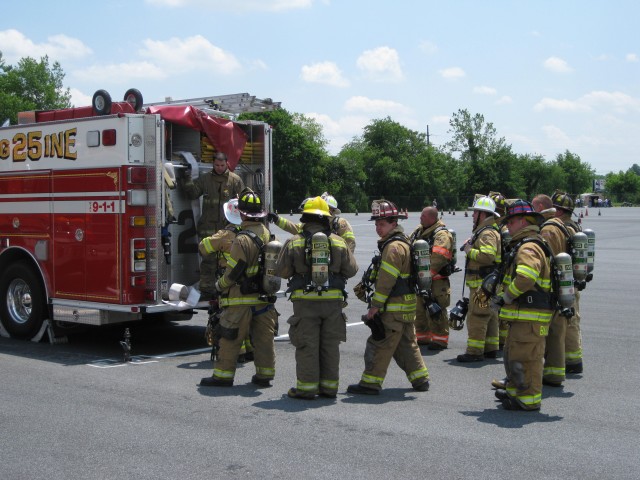
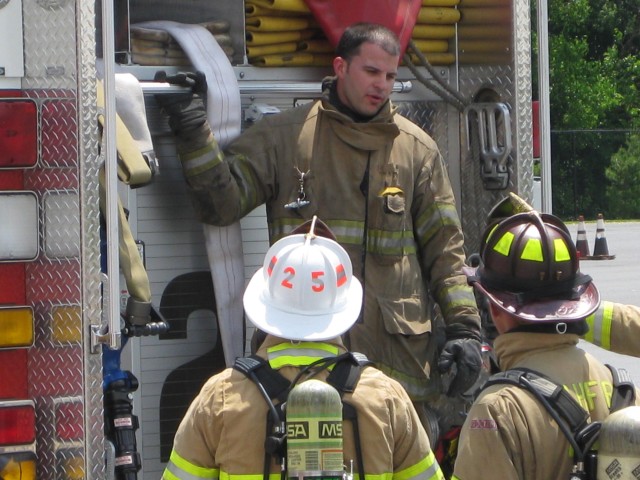
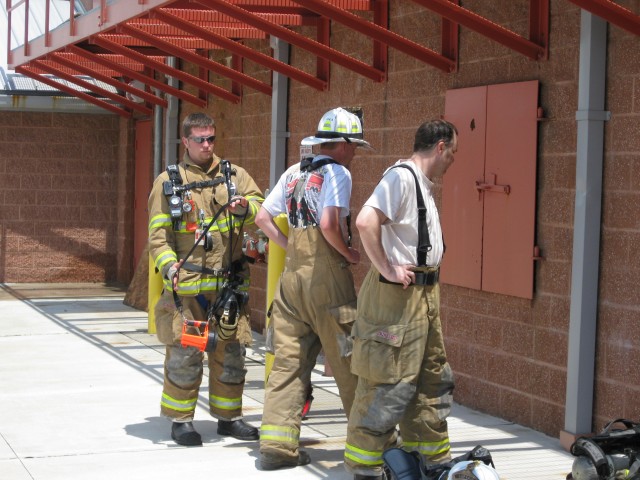
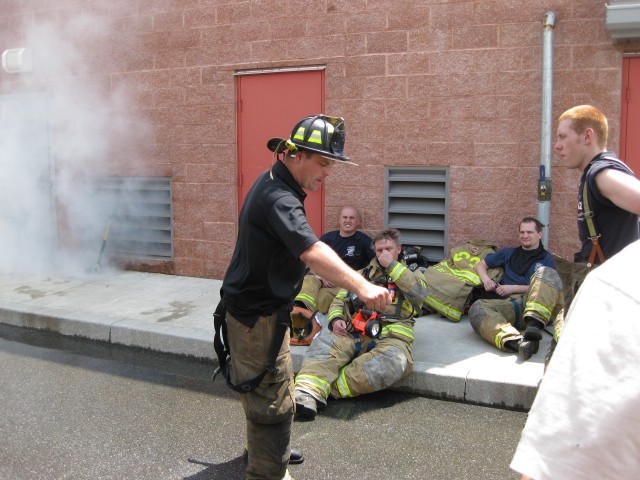
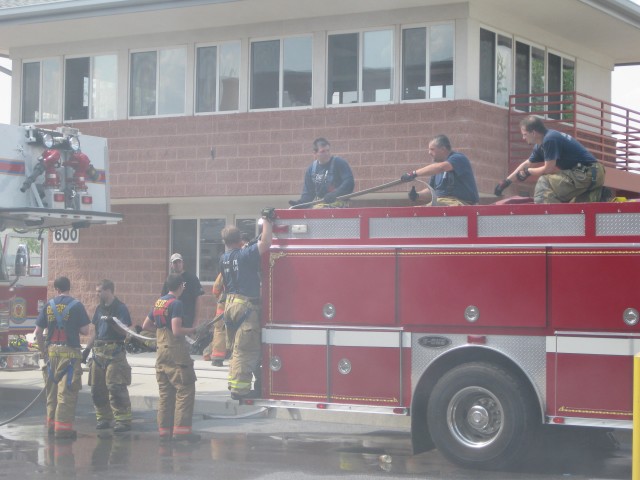
On Sunday, May 31st, three members from the Honey Brook Fire Company attended a one day class taught by Traditions Training. The members, Deputy Chief Barry Messner, Captain Dan Brooks, and Lieutenant Bruce Harlan, spent the day learning and reviewing skills in the areas of Engine, Truck, And RIT.
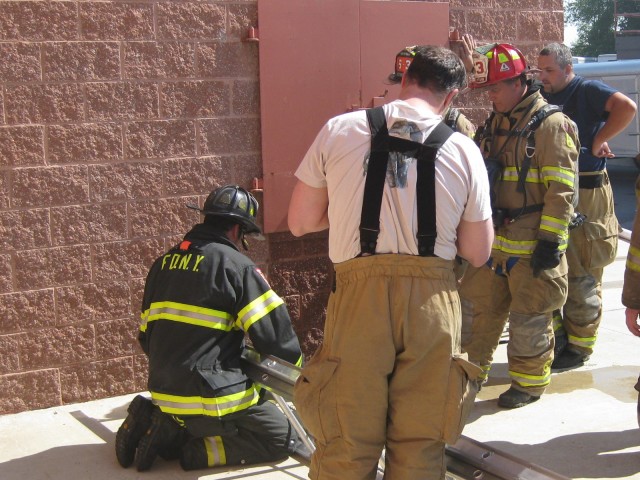
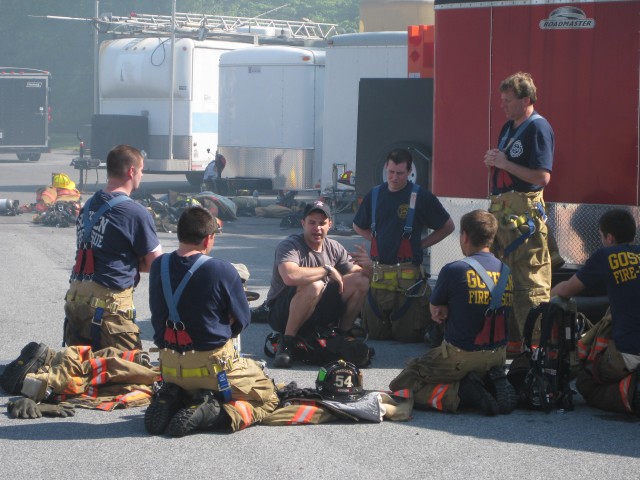
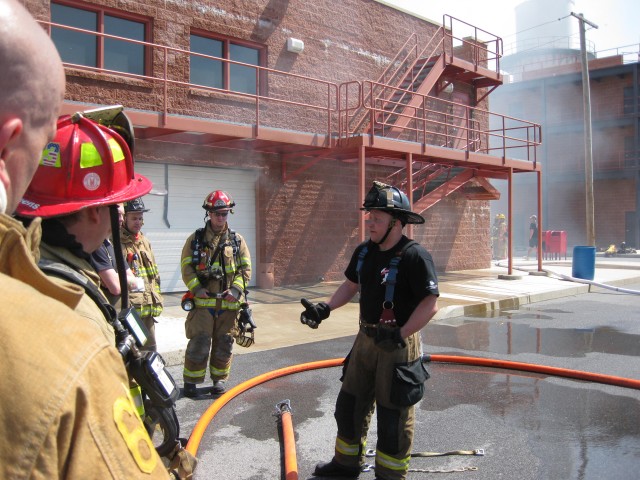
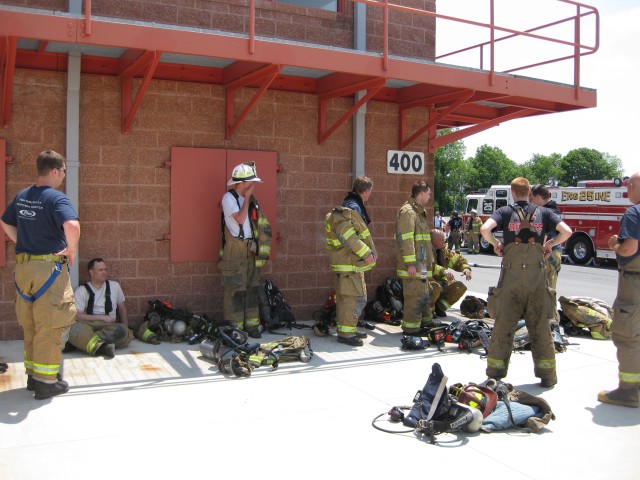
The day started off with the members meeting at 7am at the firehouse where their gear and airpacks were gone over and tested before loading in the Duty Chief's vehicle and heading to the Lancaster County Public Safety Training Center. Class started with a brief overview of the day's events followed by the group of 60+ students from at least four counties splitting into small groups which would cycle though various stations throughout the day.
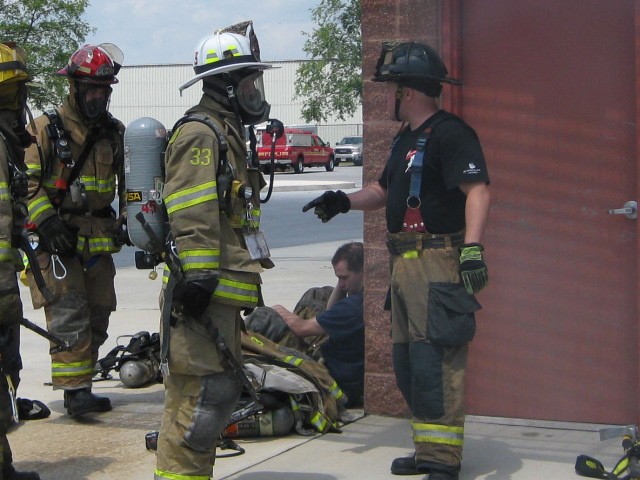
The first station for the day for the Honey Brook crew was on Rapid intervention teams (RIT). The instructor, nicknamed "Cadillac" from Washington DC Fire Dept. (DCFD), taught the group on how to properly use a RIT airpack, how to get downed firefighters on air and out of whatever trouble they found themselves in.
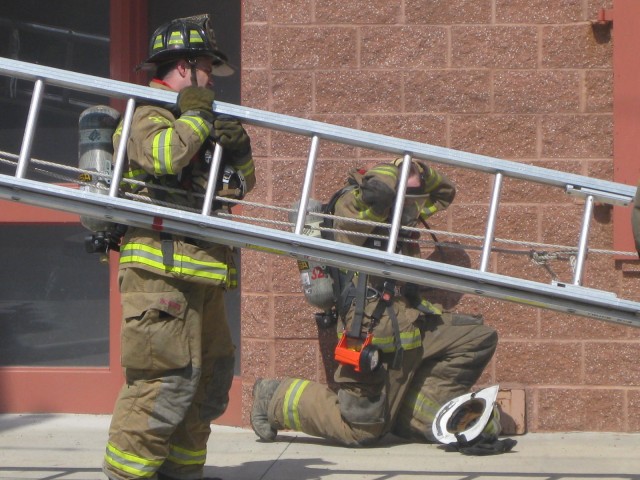
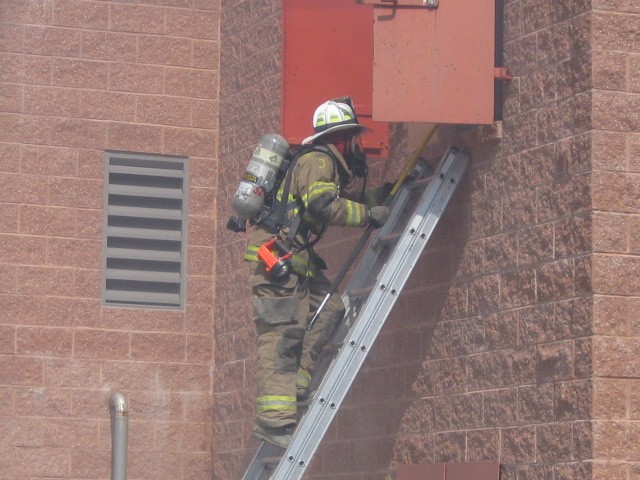
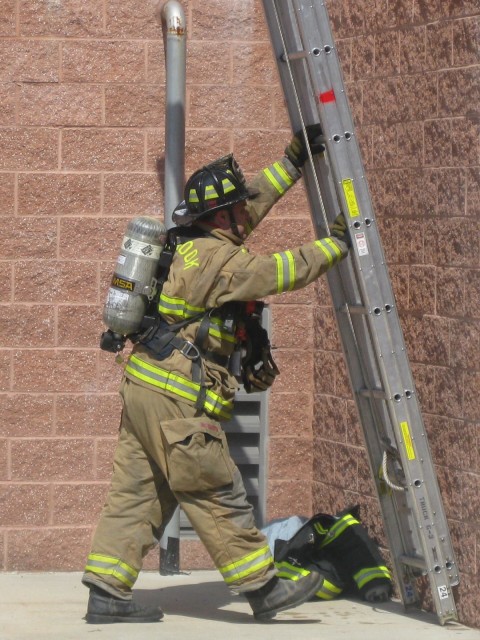
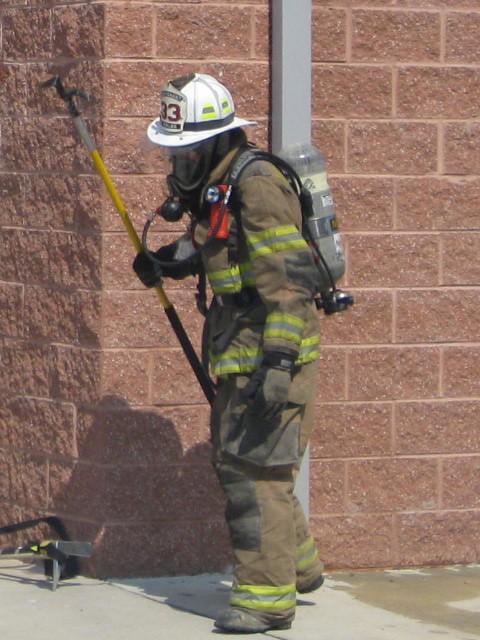
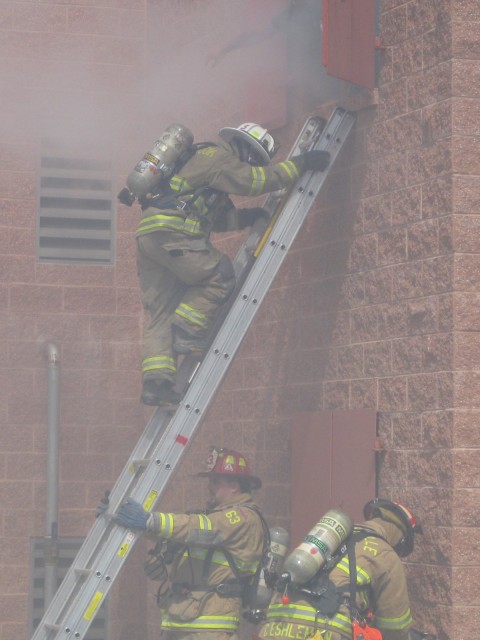
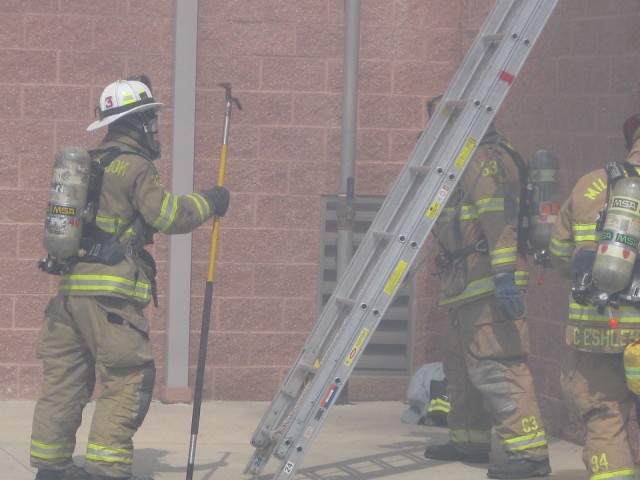
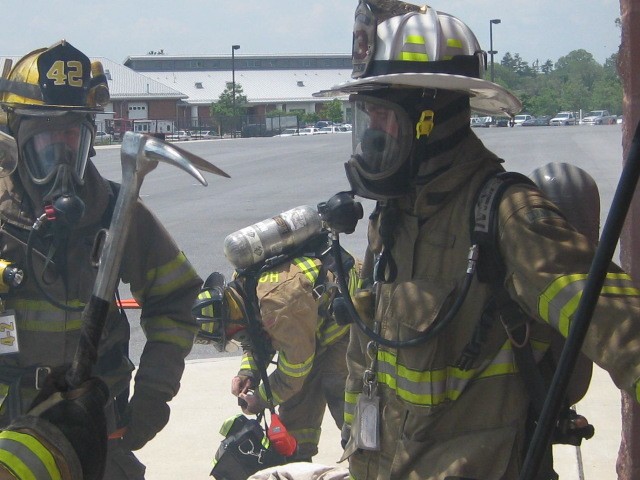
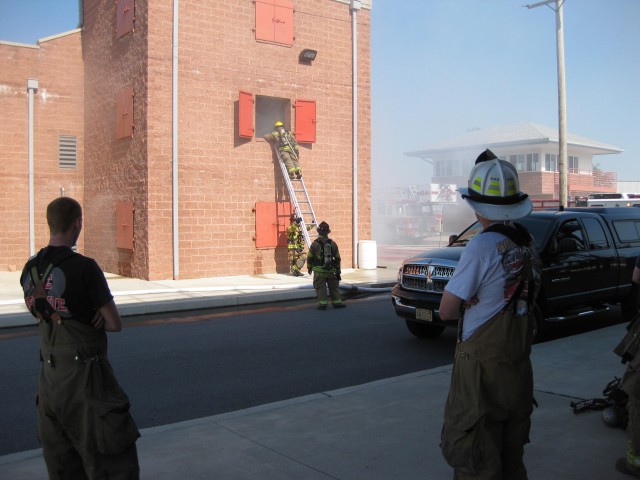
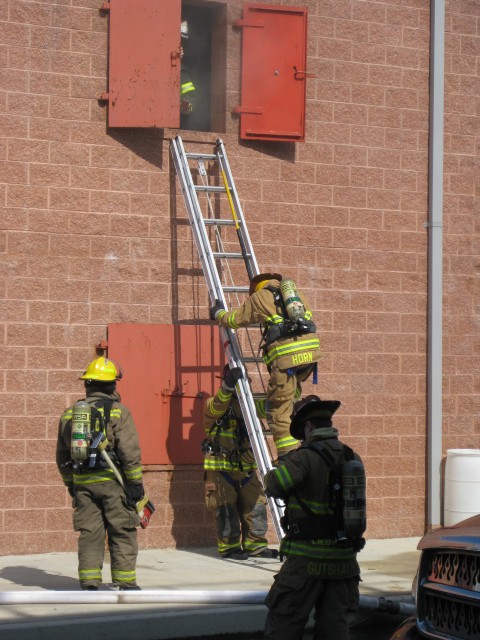
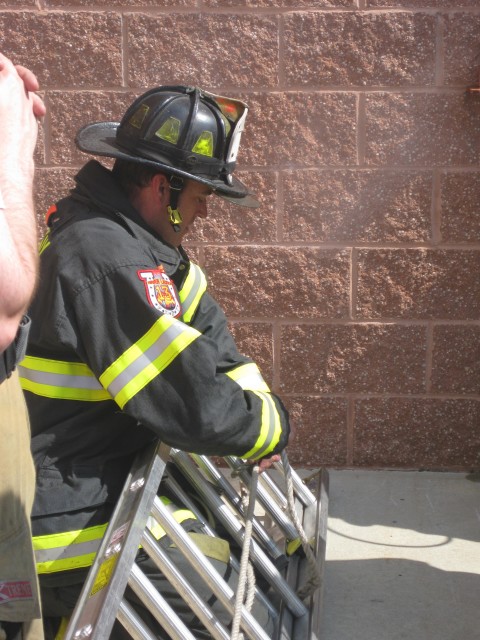
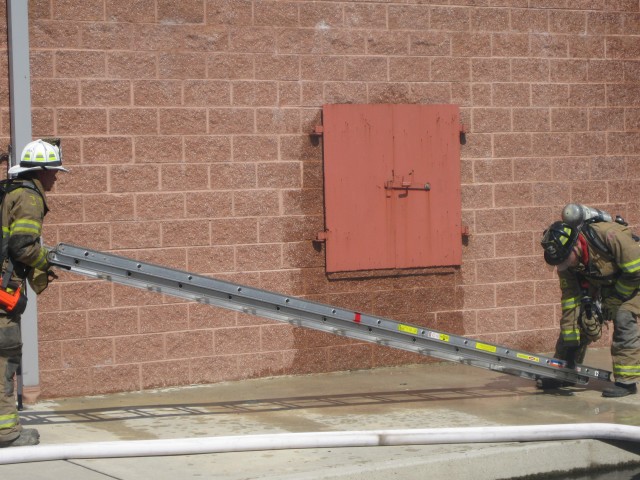
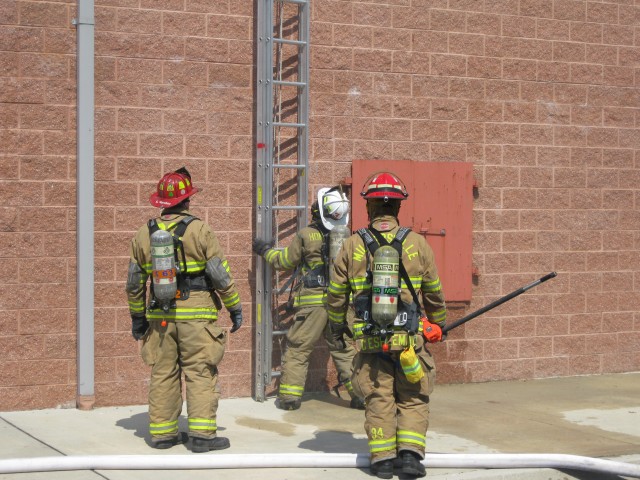
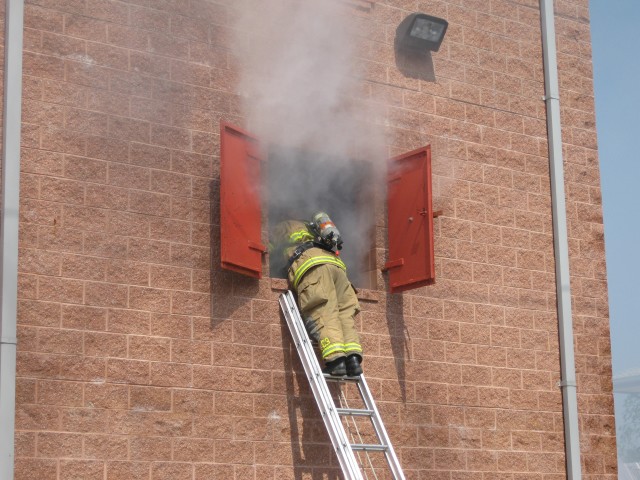
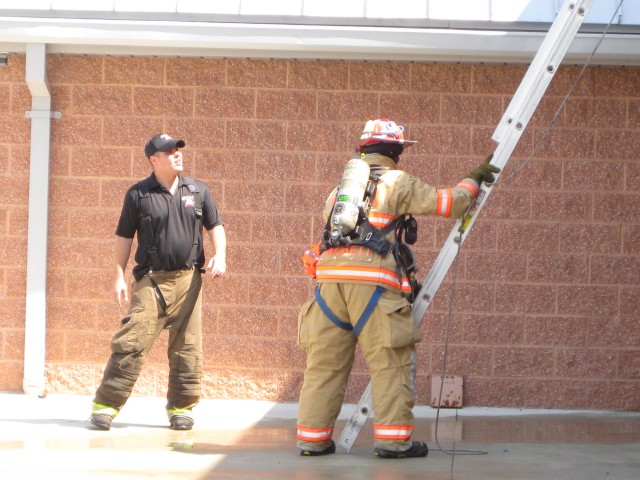
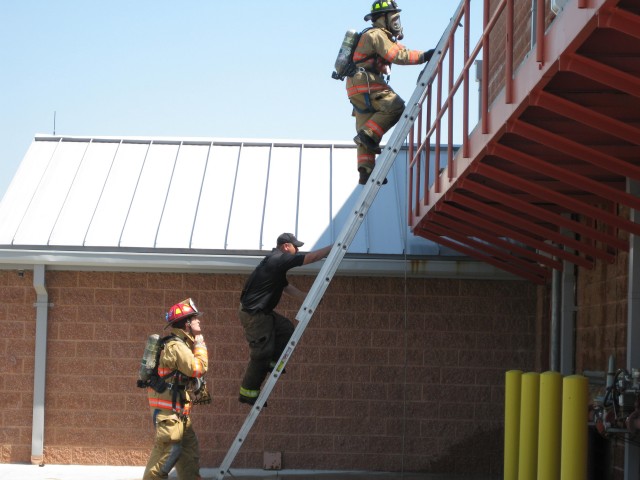
The next station was on a Truck Co. operation known as Vent Enter Search (VES). Instructor Doug Mitchell, Lt. in FDNY, discussed how VES is a technique used to rapidly enter and search rooms on upper floors of houses where there is fire below or on the same floor. A very dangerous but necessary operation at house fires to quickly find and extricate victims. Teams of two took turns performing one-firefighter ladder throws while the second FF masks up and goes up the ladder, clears the window, and enters the room(which has ZERO visibility). Upon entry the ff finds the door to the hallway, closes it, and does a rapid search of the room for any victims while the second FF makes their way up the ladder to the window to act as a beacon to let the ff inside know the way out.
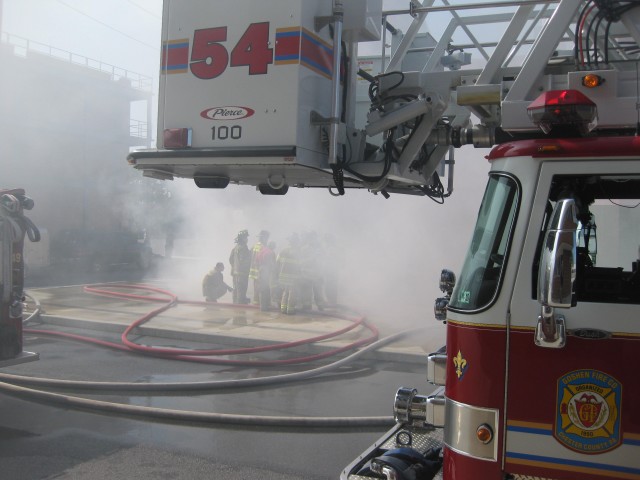
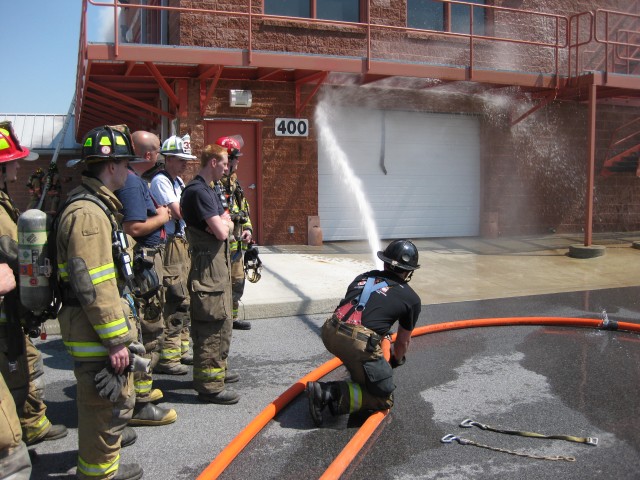
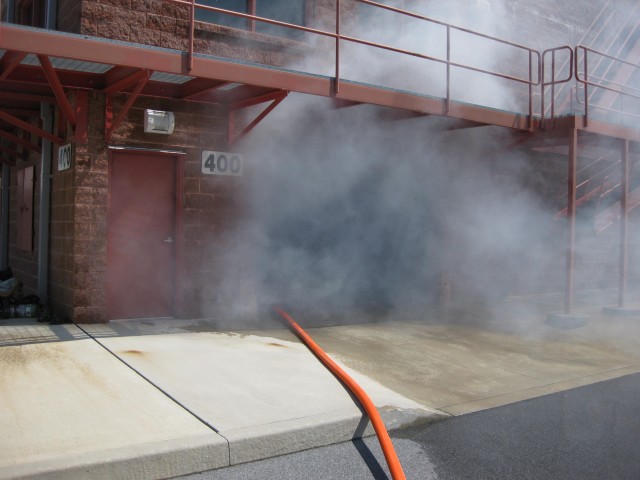
The next station was on advancing a charged 2 1/2" attack line inside a commercial type fire while flowing water. The instructor, Danny Doyle from E8 in Pittsburgh, taught us how to properly advance the line as a group, then the group demonstrated it by having to advance 200' inside inside the building and up a stairwell to the second floor, all while flowing water knocking down any fire, than backed out the line....all in zero visibilty conditions.
The next station was on Search and Rescue and RIT with a tag line(also taught by Danny Doyle). Crews had to advance into a zero visibility warehouse/office environment approx. 300 feet while searching for a downed ff whose personal distress alarm was sounding. Once the ff was found we had to assure the ff had proper air supply before attempting to extricate them to the outside. We also reviewed different S&R techniques.
The next station was on search and rescue for civilians taught by Chris Birch from DCFD Rescue 1. Crews had to go into a single family home environment, where the floor layout was unknown, again in zero visibility (with smoke) and search for victims. Honey Brook's crew of three make the second floor and started the search but after three rooms were searched, command called and said the first floor engine crew was losing the fire and we had to rapidly escape the second floor down the steps and outside.
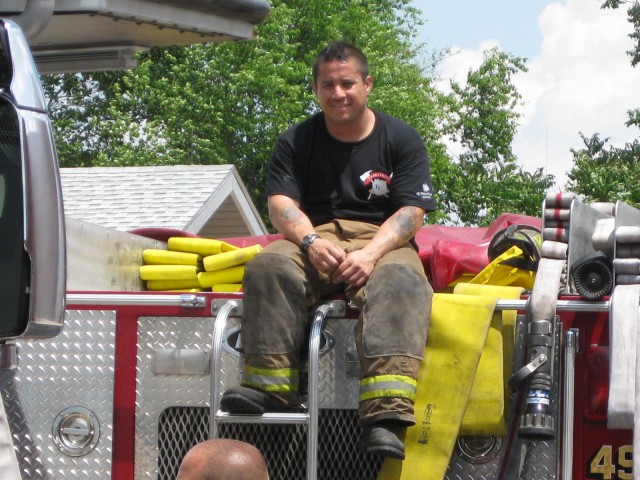
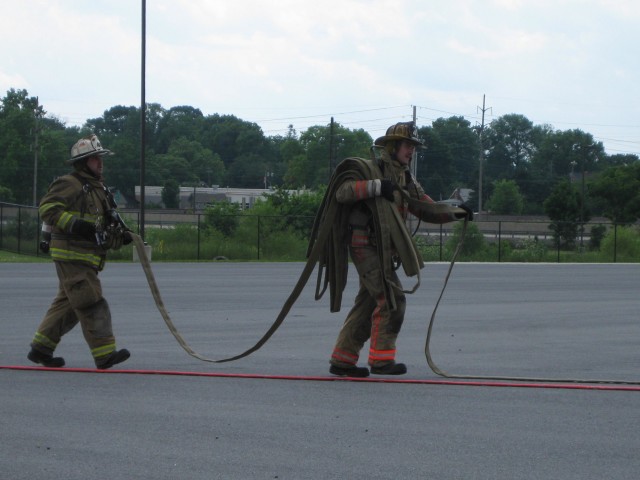
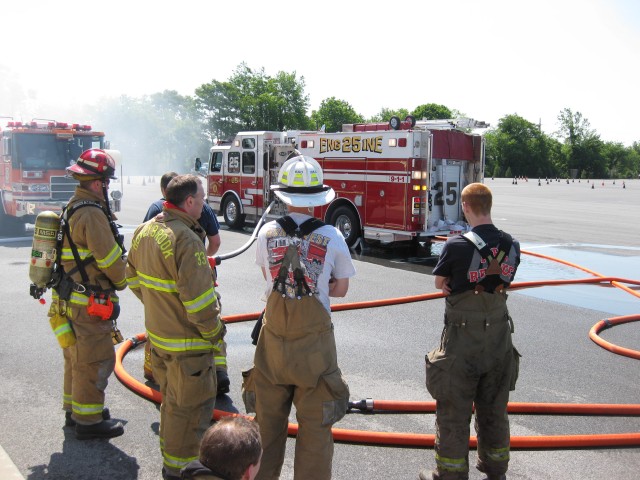
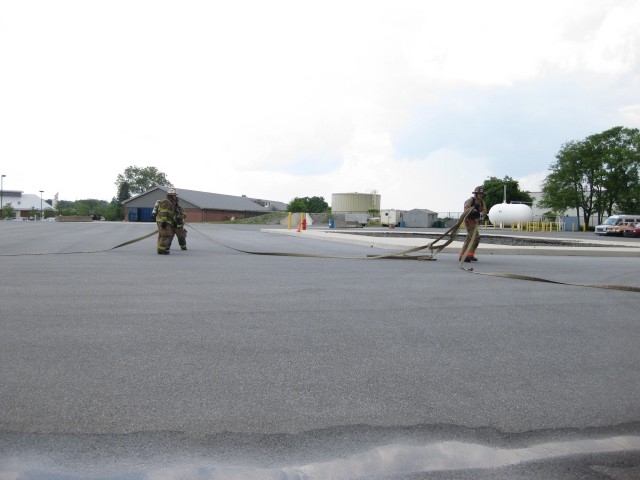
The last station of the day was on stretching long handlines 400+ feet (in case engines can't make it up driveways, Garden style apartments, big yards, etc.). The instructor Nick Martin, DCFD, showed the groups how to quickly and properly advance a 1 3/4" handline over 500' by connecting a 200' and a 300' handline together. Our group along the Captain from Millersville Fire, split with two members advancing a 200' crosslay and disconnecting the nozzel from the end (performed by Dep. Messner and Lieut. Harlan) while at the same time Captain Brooks and the Captain from Millersville advanced the 300' off the rear of the engine from the end of their line, around the building and up a 5 story stair tower before setting up for fire attack on that floor. This whole operation took less than a minute and a half. When time is of the essence and the fact fire double about every 30 seconds, learning how to advance lines properly and quickly is VERY important.
The day ended with a brief talk with the instructors and certificates being handed out.
ANOTHER great class put on by Traditions Training, who teaches the "real world" side of firefighting with a strenuous hands on approach. We would HIGHLY recommend anyone who hasn't taken a class by them will give them a try.
"LET NO MAN'S GHOST SAY HIS TRAINING LET HIM DOWN"
www.traditionstraining.com |