|
|
Beware Of Roof Dangers |
| By Fire Chief Barry Messner, Jr. | |
| February 1, 2011 | |
Faced with snow loads on flat roofs around Chester County, the Honey Brook Fire Company is recommending that building owners and residents of those buildings be aware of the weight loads that these back-to-back storms may be creating. ONLY SEND QUALIFIED PEOPLE TO INSPECT ROOFS AND MAKE SURE ALL APPROPRIATE SAFETY MEASURES ARE FOLLOWED. Property owners or residents should take the following precautions: Before A Storm 1. Review the roof's design to be certain it can support the weight of snow, ice and water or any additional live load. Look for weaknesses and reinforce it if necessary, particularly where increased weight from drifting is likely. 2. Make certain gutters, drains, downspouts and scuppers are clear and in good condition. 3. Determine a safe snow depth for the roof and plan to begin removal when accumulated snow reaches half that depth. 4. Develop a snow removal plan that includes roofs, skylights, canopies and overhangs. Assign individuals to be responsible for monitoring, snow removal, etc. 5. Be ready to put the snow removal plan into effect immediately, especially in windy weather when snow will drift and accumulate. During A Storm 1. Monitor the weather and condition of the roof. 2. Inspect roofs for leaks or structural deficiencies that may develop during the storm. 3. Clear leaves, snow, ice, silt, or other debris from gutters, drains, downspouts, and scuppers. After A Storm
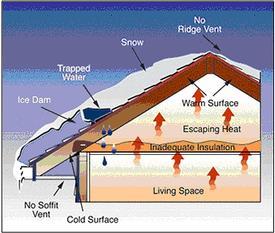
2. Remove snow from side walls to prevent high snow mounds from pushing them in. 3. Temporarily shore up and brace dipping or sagging roofs or walls. 4. Verify that drains are clear of ice and snow to allow melting and runoff. If the roof is pitched and without drains, open paths to the eaves to ensure drainage and prevent ponding. 5. Avoid ice dams by keeping the attic well ventilated so snow doesn't melt and refreeze at the roof's edge. Also make certain the attic floor is well insulated to minimize the amount of heat rising from the house into the attic. Here are several other points to consider: Improper operation of doors or windows, deflection of ceiling finishes or exposed beams, roof leaks or sprinkler heads moved for their normal positions all could be signs of roof failure. Barns and other agricultural out buildings could present a safety hazard. Be especially careful when entering those buildings and make prudent decisions about housing animals in those structures. Contact a structural engineer, building inspector or other qualified individual if you are concerned about the structural integrity of a building. Consider evacuating or moving out of the building if appropriate. Because of the anticipated cold temperatures, this threat will remain in place for a considerable time after the snow fall ends. Preventing Roof Ice Dams Ice dams are most common in northern climates. They occur when heavy snow buildup melts during the day and then refreezes when temperatures drop overnight. After several days of melting-freezing cycles, it's common for the melted water and ice to work up under the shingles until water enters the attic and eventually does damage to the ceilings, wall and contents. In cases where the ice dam goes unnoticed for an extended period of time, it can do significant damage to the building and its contents. There's no way to guarantee an ice dam won't damage your home, but you can take steps to cut the chances of an ice dam forming in the first place: If you haven't already, thoroughly clean all leaves, sticks and other debris from your home's gutters and down spouts. This allows melting roof snow to flow into gutters and through down spouts. Make every effort to keep snow on your roof to a minimum. Long-handled devices on the market called "roof rakes" let you stand on the ground and pull the snow off the roof. Keeping heavy snow loads off your roof reduces the chances for both ice dam formation and roof failure due to the weight. All winter long, keep gutters and down spouts clear of snow and icicles. Evaluate the insulation and ventilation in your attic. Most experts agree the R-value of attic insulation should be at least R-30 (R-38 is preferable in northern climates). In addition, good airflow from under the eaves or soffit area along the underside of the roof and out through the roof vents is essential. The insulation prevents heat loss from the interior of the home. The venting allows the attic air to stay cold enough to prevent or minimize the freeze/thaw cycle on the roof. Consult a reputable roofing and/or insulation contractor about these improvements. |
|
|
|